

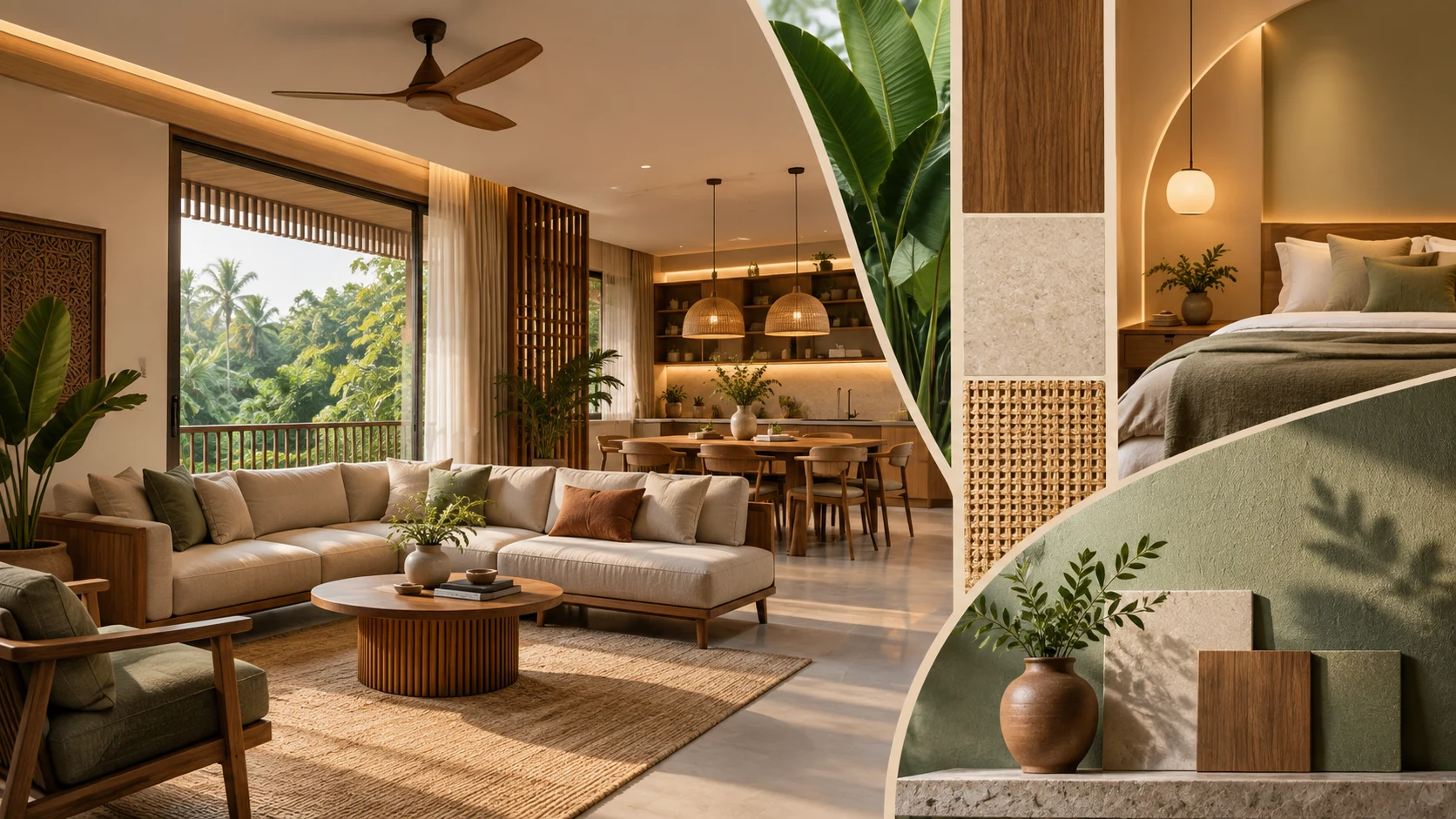
2026 Interior Design Trends in Kerala: 10 Styles, Colours & Materials Shaping Modern Homes
Kerala homes are changing. Homeowners are no longer choosing interiors based only on what looks attractive in a showroom or on Instagram. In 2026, the focus is increasingly on interiors that feel calm, function well and remain practical through Kerala’s humid climate and monsoon season.
The interior design trends in Kerala 2026 are therefore less about following one fashionable style and more about finding the right balance between aesthetics, comfort, durability and everyday living.
Warm neutrals, natural wood, thoughtful lighting, flexible furniture, greenery and cleaner layouts are becoming more relevant. At the same time, traditional Kerala influences are being combined with contemporary planning instead of being completely removed.
The important question is not simply, “What is trending in 2026?”
It is:
Which design ideas actually make sense for your Kerala home?
Let’s look at the styles, colours and materials worth considering before you begin your next interior project.
What Is Changing in Kerala Home Interiors in 2026?
The biggest change is a move away from interiors that are designed purely for visual impact.
Kerala homeowners are increasingly looking for homes that are easy to live in and maintain. This matters because interior decisions have to work with real conditions: humidity, heavy rain, cooking habits, dust, natural light, ventilation and the amount of storage a family actually needs.
Current 2026 design discussions are also showing stronger interest in warm minimalism, natural materials, layered lighting, flexible spaces and climate-conscious design.
That creates an interesting direction for Kerala interiors: modern design without losing practicality or regional character.
A modern Kerala home may therefore have clean cabinetry, neutral walls and contemporary lighting while still using timber tones, cane, stone, indoor plants or a traditional-inspired pooja space.
The result does not have to look traditionally Kerala or aggressively modern. It can be a considered combination of both.
10 Interior Design Trends Shaping Kerala Homes in 2026
1. Japandi-Inspired Kerala Interiors
Japandi combines the simplicity of Japanese interiors with the warmth associated with Scandinavian design. The style generally relies on clean lines, natural materials, muted colours and controlled decoration.
It works particularly well when a homeowner wants a peaceful home without making the interiors feel cold.
For a Kerala home, Japandi should not simply be copied from an overseas reference image. Natural wood tones, locally appropriate materials, good ventilation and carefully selected textures can make the concept feel more connected to the region.
Think warm beige walls, timber finishes, simple furniture, soft lighting and limited decorative objects.
Suitable colours: off-white, oatmeal, beige, greige, muted brown and soft green.
Suitable materials: natural wood, cane, stone, linen-like fabrics and textured finishes.
Where it works best: living rooms, bedrooms and compact apartments.
Limitation: excessive minimalism can become impractical for families that need substantial storage.
Who should consider it: homeowners who prefer calm, uncluttered spaces with warmth rather than stark white minimalism.
Japandi has also continued to appear in 2026 design coverage, particularly through its combination of natural materials, muted palettes and restrained styling.
2. Warm Minimalism
Minimalism is not disappearing. It is becoming warmer.
Instead of completely white interiors, warm minimalism uses creamy whites, beige, natural timber, subtle textures and carefully chosen furniture.
For Kerala homes, this approach can be particularly useful because it provides a clean visual appearance without depending entirely on bright white surfaces.
A living room could combine an off-white wall with a wood-finish TV unit, a neutral sofa, warm LED lighting and one textured accent wall.
The trick is restraint.
Do not fill every wall simply because the space feels empty.
Best for: apartments, modern villas and homeowners who want a contemporary but comfortable appearance.
Practical limitation: light-coloured surfaces may require more frequent cleaning in homes exposed to dust and daily family activity.
3. Modern Kerala Style
One of the strongest opportunities for Kerala homeowners is not choosing between “traditional” and “modern.”
It is combining them.
Modern Kerala interiors can use contemporary furniture, clean storage and modern lighting while retaining selected regional elements such as timber detailing, natural textures, traditional patterns or a thoughtfully designed pooja area.
The goal is not to turn the entire house into a traditional interior.
Instead, choose one or two elements that give the home a sense of place.
For example, a contemporary living room might use a simple wooden partition inspired by traditional detailing while the rest of the space remains modern.
This approach tends to age better than copying a highly specific trend.
Best for: independent houses, villas and homes influenced by Kerala architecture.
4. Natural Wood and Earthy Materials
Natural-looking materials continue to play an important role in modern interiors.
Wood adds warmth to otherwise minimal spaces, while stone, cane, clay-inspired finishes and earthy textures can prevent a contemporary home from looking overly manufactured.
In Kerala, however, material selection should consider the location and exposure.
Wood products, finishes and boards should be selected based on the application, moisture exposure, maintenance expectations and manufacturer’s specifications rather than simply choosing something because it looks premium.
Use warmer timber tones for cabinetry, wall panels, furniture and selected partitions rather than covering every surface in wood.
Best for: living rooms, bedrooms, dining areas and feature walls.
Limitation: natural materials can require more care and may cost more depending on quality, sourcing and workmanship.
5. Biophilic Interior Design
Biophilic design goes beyond placing a few plants in the corner of a room.
It is about creating a stronger visual and physical connection with nature through greenery, daylight, natural materials, views, textures and indoor-outdoor relationships.
Kerala already has a natural advantage here.
Where the house permits it, larger windows, internal greenery, balconies, courtyards or views toward outdoor vegetation can become part of the interior experience.
For apartments, the approach can be simpler: indoor plants, natural wood, woven textures and better use of available daylight.
But plants should not block ventilation, damage surfaces through excess moisture or create additional maintenance problems.
Best for: living rooms, balconies, home offices and bedrooms.
Who should consider it: homeowners who want their interiors to feel connected to Kerala’s greenery rather than completely sealed off from it.
6. Multifunctional and Space-Saving Interiors
Not every Kerala home has unlimited floor area.
Apartments and compact urban homes especially need furniture and storage that perform more than one function.
A study area can become a work-from-home station. A window-side bench can provide seating and storage. A partition can separate spaces while incorporating shelves. A dining unit can include additional storage.
This is one of the most practical Kerala interior design ideas because it improves usability without necessarily requiring more square footage.
Vertical storage is particularly useful in kitchens, bedrooms and utility areas.
The objective should be simple:
Use the available space better instead of making the home feel smaller by adding more furniture.
7. Textured Walls and Statement Surfaces
Plain painted walls are being joined by more tactile surfaces.
Depending on the design, this could include wood-look panels, textured paint, stone-inspired finishes, fluted detailing or carefully selected decorative surfaces.
The mistake is treating every wall as a feature wall.
One strong surface often works better than five competing ones.
In a Kerala home, textured surfaces should also be selected according to cleaning requirements and moisture exposure.
A textured wall behind a TV unit may work well in a dry interior area, while a difficult-to-clean finish may be a poor choice in an area exposed to cooking splashes or frequent contact.
Best for: TV walls, bedroom backdrops, dining walls and entry areas.
8. Layered and Statement Lighting
Lighting is becoming a design element rather than something added at the end.
A good Kerala home interior should consider at least three types of lighting:
- General lighting for everyday visibility
- Task lighting for activities such as cooking, reading and working
- Accent lighting for atmosphere and architectural details
For example, a living room can combine ceiling lighting with concealed lighting, floor lamps or wall lights.
In a kitchen, task lighting should support countertop work rather than simply making the ceiling bright.
Warm lighting can also complement timber and earthy colour palettes.
The important point is planning the lighting together with furniture, false ceilings, cabinetry and electrical points.
This is especially important if you want a clean final appearance without exposed wires or awkwardly positioned fixtures.
Layered lighting is one of the recurring directions in current 2026 interior-design coverage.
9. Sustainable and Durable Material Choices
Sustainability in interiors should not mean buying something simply because it has a “green” label.
For a homeowner, a more practical approach is to consider:
- How long the material is expected to last
- How easily it can be maintained
- Where it is being used
- Whether replacement is easy
- How much waste is created
- Whether the finish is appropriate for the environment
Low-VOC finishes, responsibly sourced materials and durable products can all contribute to a more considered interior, but suitability depends on the specific product.
Kerala’s climate makes durability especially important. A beautiful finish that is difficult to maintain in a humid environment is not necessarily a good design decision.
Best for: whole-home interiors, kitchens, storage and frequently used areas.
10. Smart and Future-Ready Home Interiors
Smart-home technology is becoming more accessible, but good smart design is not about installing gadgets everywhere.
The better approach is to plan technology around actual needs.
Examples include:
- Smart lighting controls
- Automated curtains
- Sensor-based lighting
- Smart door locks
- Appliance integration
- Charging points
- Home entertainment systems
- Network points
The infrastructure should ideally be considered during the design stage.
Adding technology after cabinetry, ceilings and electrical work are complete can make the installation more complicated.
A future-ready home should also allow for changing needs. A bedroom may eventually become a child’s room, guest room or home office.
Flexibility is therefore as important as technology.
Interior Colour Trends for Kerala Homes in 2026
The strongest colour direction for 2026 is moving toward warmer, more natural palettes rather than relying entirely on cool grey.
Current design reporting points toward creamy whites, earthy browns, muted greens and warm timber tones.
For Kerala homes, useful colour directions include:
Warm Neutrals
Beige, cream, warm white and greige provide a calm base for living rooms and bedrooms.
Earthy Tones
Terracotta, clay, muted brown and warm ochre can add depth without making an entire room dark.
Muted Greens
Sage and olive-inspired greens work particularly well when paired with timber and natural textures.
Natural Wood Tones
Wood itself can become part of the colour palette rather than treating timber as a separate decorative element.
Deep Accent Colours
Burgundy, deep green, charcoal or brown can work as controlled accents on selected walls, furniture or décor.
The important point is proportion.
A dark colour may look excellent on a feature wall but overwhelming if used across a small room with limited natural light.
Interior Materials Kerala Homeowners Are Choosing in 2026
Material selection should follow the room and its conditions rather than fashion.
Wood and Wood-Finish Surfaces
Useful for wardrobes, TV units, kitchens, partitions and furniture. The exact board and finish should be selected according to application and moisture exposure.
Stone and Stone-Look Surfaces
Useful for flooring, counters and feature areas where durability and easy cleaning are priorities.
Glass
Glass can help maintain visual openness in partitions and smaller rooms, but cleaning requirements and safety should be considered.
Cane and Woven Textures
Cane and similar woven textures can introduce warmth into living and bedroom spaces. They are better used selectively rather than everywhere.
Textured Paint and Wall Finishes
These can create visual interest without adding bulky furniture. Choose finishes that suit the room’s exposure and maintenance requirements.
Laminates and Engineered Surfaces
These remain practical options for cabinetry and furniture because they provide a wide range of colours, textures and patterns. The correct product should be selected based on use, quality and manufacturer specifications.
There is no universal “best material” for every Kerala home.
The right question is:
Where will the material be used, what will it be exposed to, and how much maintenance are you willing to provide?
How to Apply 2026 Interior Trends to Different Rooms
Living Room
Use warm neutral walls, comfortable furniture, a restrained TV unit, layered lighting and one or two strong textures.
If the room is compact, avoid oversized furniture and excessive decorative pieces.
A well-designed living room should provide comfortable circulation as well as visual appeal.
Bedroom
Bedrooms benefit from softer colours and less visual clutter.
Warm wood, upholstered furniture, concealed storage and adjustable lighting can create a calmer environment.
Avoid choosing a dramatic trend simply because it photographs well. A bedroom needs to remain comfortable after the trend stops feeling new.
Kitchen
Kitchen design should prioritise workflow, storage, ventilation, cleaning and durability.
Modern modular kitchens can combine concealed storage, tall units, drawers, appliance integration and practical work surfaces.
Homestin currently highlights moisture-conscious materials, storage planning, ventilation and practical kitchen layouts as part of its modular-kitchen approach.
Dining Area
A dining space does not necessarily need a large amount of decoration.
A statement pendant, timber detailing, a textured wall or a compact storage unit can create enough visual interest.
For smaller homes, choose furniture that leaves comfortable circulation around the table.
Pooja Room
A contemporary pooja room can combine traditional visual cues with modern storage and lighting.
Natural wood, warm lighting and simple detailing often work better than filling the space with multiple decorative materials.
The design should also consider ventilation, cleaning and the family’s actual daily rituals.
Home Office / Study
A good study area needs more than a desk.
Plan for comfortable seating, task lighting, power points, storage and a background that does not create visual distraction during video calls.
In compact homes, a built-in study unit can allow the same area to serve multiple purposes.
Which Interior Style Works Best for Your Kerala Home?
There is no single best interior style for every Kerala house.
| Home Type | Suitable Direction | Why |
|---|---|---|
| Independent house | Modern Kerala / Warm minimalism | Balances regional character with contemporary living |
| Apartment | Japandi / Warm minimalism | Helps create a visually open and uncluttered feel |
| Compact home | Space-saving contemporary | Prioritises storage and usable floor area |
| Luxury villa | Modern organic / Contemporary | Allows stronger materials, lighting and larger furniture |
| Traditional Kerala house | Modern Kerala | Preserves selected architectural character |
| Modern villa | Warm minimalism / Modern contemporary | Works well with clean architecture and open layouts |
Your lifestyle should decide the final style.
A family that cooks frequently may need a very different kitchen from someone who orders most meals. Someone working from home needs different planning from someone who rarely works at home.
Good Kerala home interior design starts with these realities before selecting colours or furniture.
How Much Do These Interior Trends Cost?
There is no honest single price for implementing 2026 interior trends.
Two homes with the same floor area can have very different project costs because of material selection, design complexity and the amount of custom work involved.
The main cost factors include:
- Total area
- Number of rooms
- Modular furniture requirements
- Material and finish selection
- Hardware quality
- Custom furniture
- Lighting
- False ceiling work
- Electrical modifications
- Plumbing changes
- Civil modifications
- Appliances
- Design complexity
- Installation and workmanship
If you are working with a fixed budget, do not start by selecting expensive finishes.
Start by deciding where the money matters most.
For example, storage, kitchen hardware and frequently used furniture may deserve more attention than decorative elements that can be changed later.
A professional interior consultation can help establish priorities before money is committed to individual finishes.
Common Interior Design Mistakes Kerala Homeowners Should Avoid
1. Copying Instagram or Pinterest Without Adaptation
A reference image is inspiration, not a construction plan.
Your room dimensions, windows, ceiling height, climate and lifestyle may be completely different.
2. Choosing Trends Over Lifestyle
A curved sofa may look attractive, but if it reduces usable space, it is not automatically a good choice.
3. Ignoring Ventilation
Kerala’s humid conditions make ventilation an important part of comfortable home planning. Kerala’s official environmental data records generally high humidity, with monsoon-period relative humidity around 85% in the state.
4. Selecting Materials Only by Appearance
A beautiful material may not be appropriate for every location.
Check application, moisture exposure, maintenance and manufacturer’s recommendations.
5. Using Too Many Dark Colours
Dark shades can add depth, but excessive use can make compact rooms feel visually heavy, particularly where daylight is limited.
6. Planning Lighting Too Late
Lighting should be considered alongside the ceiling, furniture, storage and electrical layout.
7. Not Planning Enough Storage
A beautiful home becomes cluttered quickly if everyday items do not have designated storage.
8. Prioritising Appearance Over Maintenance
Ask how a surface will look after years of cooking, cleaning, children, pets and everyday use.
That question can prevent expensive mistakes.
A Practical Way to Choose Your 2026 Interior Style
Before selecting a style, answer five questions:
1. How do we actually use this room?
Design around real activities rather than imagined lifestyles.
2. How much maintenance are we comfortable with?
Some materials require more care than others.
3. How much natural light does the room receive?
Colour and material choices should respond to daylight.
4. What storage do we genuinely need?
Storage should be planned before decorative elements.
5. Which parts of the home should remain timeless?
Use trends selectively. Furniture, cabinetry and major finishes are expensive to replace, while accessories and smaller decorative elements can change more easily.
If you are considering professional help, don’t choose a designer simply because a company appears for a search such as “best interior designers in Trivandrum.” Look at whether the designer understands your home’s layout, lifestyle, material requirements, budget and maintenance expectations. A strong portfolio is useful, but the ability to explain why a particular design or material suits your home matters just as much.
For homeowners specifically looking for interior designers in Trivandrum, the same principle applies: compare the design approach, communication, material recommendations, project scope and suitability for your property rather than relying only on rankings or promotional claims.
This is where professional planning becomes useful. Homestin Interiors & Construction approaches interiors around space, lifestyle and practical requirements rather than treating every project as a fixed template. Its website also highlights customised design, 2D/3D visualisation and project planning as part of its approach.
Planning Your Home Interiors in Kerala?
Trends can provide direction, but your home still needs to work for your family every day.
If you’re planning a new interior or renovation, Homestin Interiors & Construction can help you evaluate your space, select an appropriate design direction and plan the interiors around your lifestyle and requirements.
Planning your home interiors in Kerala? Speak with an interior design professional to discuss your space, style and requirements.
Frequently Asked Questions
The major directions include warm minimalism, Japandi-inspired interiors, natural materials, biophilic design, multifunctional spaces, layered lighting, earthy colours, textured surfaces, durable material choices and smart-home planning. The important difference for Kerala is adapting these ideas to humidity, ventilation, maintenance and local lifestyles.
There is no universal best style. Warm minimalism, modern Kerala, Japandi and contemporary interiors can all work well depending on the home’s architecture, size, daylight, family requirements and budget. The best style is one that remains practical after the trend loses its novelty.
Yes. Japandi can work particularly well in Kerala when natural wood, warm neutrals, simple furniture and good lighting are combined with practical storage and climate-appropriate materials. Avoid taking the minimalist concept so far that essential storage and everyday functionality are sacrificed.
Warm whites, beige, cream, earthy browns, muted greens and selected terracotta-inspired tones are versatile choices. Darker colours can be used as accents. The right choice also depends on natural light, room size and the amount of maintenance required.
There is no single material suitable for every application. Choose materials according to the room, moisture exposure, ventilation, maintenance requirements and manufacturer’s specifications. Kitchens, utility areas and other moisture-prone spaces require particularly careful material selection.
Use appropriately scaled furniture, built-in storage, lighter colours, good lighting, uncluttered layouts and visual continuity between spaces. Mirrors and glass can also help in selected locations, but they should support the layout rather than be added simply to make the room look larger.
Interior costs vary significantly based on area, materials, furniture, hardware, lighting, civil work, electrical changes, customisation and workmanship. Instead of relying on a generic per-square-foot figure, homeowners should obtain a project-specific estimate based on the actual scope.
Trends can provide direction, but your home still needs to work for your family every day.
If you’re planning a new interior or renovation, Homestin Interiors & Construction can help you evaluate your space, select an appropriate design direction and plan the interiors around your lifestyle and requirements.