

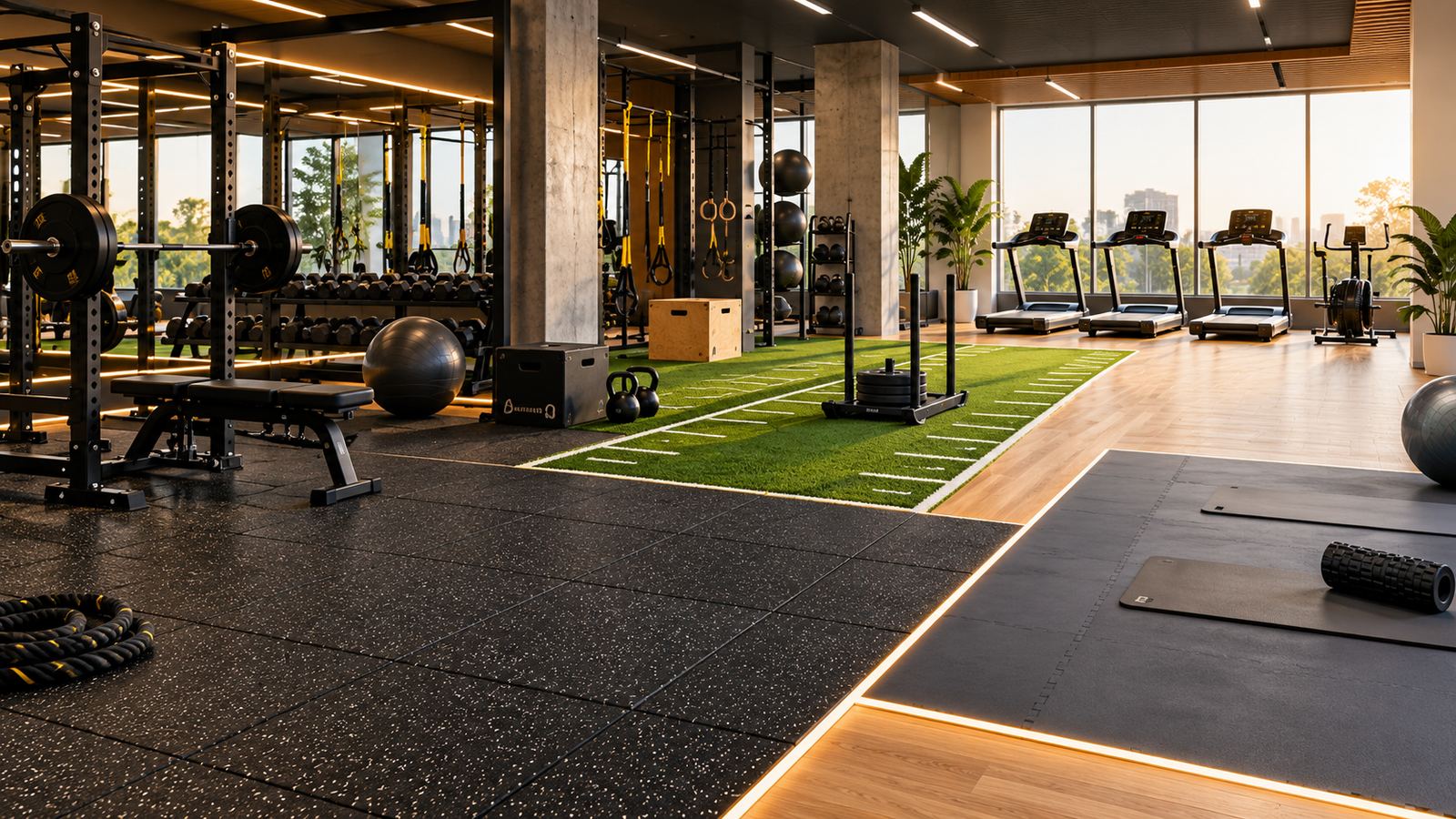
Gym Flooring Guide: Best Flooring Options for Different Workout Areas
Walk into any gym and your feet notice the floor before your eyes notice the equipment. The right surface absorbs the thud of a dropped dumbbell, keeps you steady during a sprint, and survives a Kerala monsoon without fuss. The wrong one cracks, smells, or turns slippery. As gym interior designers in Trivandrum, we at Homestin see flooring decided late in most projects, usually after the equipment list is final, and it is the one decision that is hardest to undo. This guide walks through the best flooring for each workout area so you can plan it early and plan it well.
Quick Answer: The Best Flooring for Each Gym Zone
If you only have a minute, this table covers it. The detail behind each choice follows below.
| Workout area | Best flooring | Typical thickness | Why it works |
|---|---|---|---|
| Free weights and strength | Dense rubber tiles or rolls | 15–20 mm | Absorbs impact, protects the slab, grips well |
| Lifting platform | Layered rubber over timber or solid rubber | 20 mm and above | Handles repeated heavy drops |
| Cardio zone | Rubber or heavy-duty vinyl | 8–12 mm | Reduces vibration under treadmills and cycles |
| Functional and HIIT | Rubber with a turf lane | 10–15 mm | Takes jumps, sleds and kettlebells |
| Yoga, stretching, Pilates | Cushioned vinyl, cork-type or EVA-backed surface | 5–10 mm | Soft, warm underfoot, easy to clean |
| Group classes and dance | Sprung floor or resilient vinyl | 8–12 mm | Kinder on knees and ankles |
| Changing and wet areas | Anti-skid ceramic or vinyl with drainage | As specified | Slip resistance and hygiene |
Why Flooring Is the Foundation of Gym Interior Design
Flooring does four jobs at once. It protects the building from heavy equipment, protects people from impact, controls noise and vibration, and sets the visual tone of the room. A gym can have excellent lighting, mirrors and colour, yet still feel cheap if the floor is patchy or smells of rubber six months in.
That is why flooring belongs in the first planning round, not the last. If you are still shaping the bigger picture, our guide on Gym Interior Designing: A Complete Guide to Planning Functional and Attractive Fitness Spaces explains how layout, zoning, ventilation and lighting fit together. Flooring is the layer that ties those decisions to the ground.
Know Your Materials Before You Choose
- Rubber (SBR, EPDM, vulcanised): The default for serious training. Recycled SBR is the budget-friendly standard, while EPDM and virgin rubber cost more but usually smell milder and look cleaner. Available as interlocking tiles, loose-lay tiles, or continuous rolls.
- PVC or vinyl: Smooth, easy to clean and available in wood and stone looks. It suits cardio, studios and multipurpose rooms, but is not the best choice for heavy dropping.
- EVA foam: Light, soft and affordable. Good for stretching corners and home setups, but it dents under equipment and wears quickly in busy commercial use.
- Artificial turf: Ideal for sled pushes, lunges and agility lanes. It usually works best as an inlay within a rubber floor rather than the whole gym.
- Sprung or engineered timber: Premium and forgiving, popular for dance and group exercise rooms, though it needs more care in humid climates.
- Seamless polyurethane or resin systems: A growing option for premium studios, offering a continuous, hygienic surface but needing skilled installation.
Best Flooring for Different Workout Areas
1. Free Weights and Strength Zone
This is the toughest area in the gym. Dumbbells get dropped, plates get dragged and benches sit in the same spot for years. Go for dense rubber at 15 to 20 mm, either interlocking tiles or rolls. Tiles are easier to replace if one spot wears out. Rolls give a cleaner, seamless look and are often favoured in larger commercial rooms. For a dedicated lifting platform, add a layered build-up, with timber or thick rubber in the centre, so heavy barbell drops do not damage the slab below.
2. Cardio Area
Treadmills, bikes and cross-trainers need a stable, quiet and level surface. Rubber at 8 to 12 mm or good-quality vinyl works well. The real priority here is vibration control. A treadmill running for hours on a thin, hard surface transmits noise through the structure, which matters a lot in apartment or first-floor gyms. Choose a surface that is firm enough that machines do not wobble, yet dense enough to dampen sound.
3. Functional Training and HIIT
Box jumps, battle ropes, kettlebell swings and sled pushes put very different stress on a floor. A 10 to 15 mm rubber base with an embedded turf strip handles most of it. Keep the turf lane at least eight to ten metres long if the room allows, and fix it properly so the edges do not lift.
4. Yoga, Stretching and Pilates Corner
Here comfort and warmth matter more than toughness. A cushioned vinyl or a soft, EVA-backed surface at 5 to 10 mm feels good for floor work and is simple to wipe down. Keep this zone visually separate from the weights area, using a different tone or a clear edge, so people naturally understand where heavy training ends.
5. Group Classes, Dance and Aerobics
Repetitive jumping is hard on knees and ankles. A sprung floor, or a resilient vinyl over a shock-absorbing underlay, reduces that load noticeably. If you are building a boutique studio, this is where spending a little more pays back in member comfort.
6. Changing Rooms, Showers and Recovery Areas
Never carry gym rubber into wet zones. Use anti-skid ceramic tiles or slip-resistant vinyl with proper falls to the drain. Recovery spaces such as steam, sauna or ice-bath corners, which many modern gyms now add, need materials that tolerate heat, moisture and constant cleaning.
Flooring for Kerala Conditions
Most flooring advice online is written for cooler, drier countries. Kerala adds a few extra variables:
- Humidity and moisture: Damp rising through a ground-floor slab can trap moisture under rubber and cause odour or lifting. Check the slab and add a damp-proof layer where needed.
- Monsoon season: Wet footwear and humid air raise slip risk at entrances. Use a washable entry mat zone before the main training floor.
- Ventilation: Rubber holds smell when air is stagnant. Good airflow or air-conditioning matters as much as the material.
- Apartment living: In Trivandrum’s apartment blocks and upper-floor gyms, noise travels easily. An acoustic underlay beneath the rubber can keep neighbours happy.
- Cleaning routine: Choose a surface your housekeeping team can clean daily without harsh chemicals that dull or degrade the material.
What’s New in Gym Flooring in 2026
Flooring has quietly changed over the last couple of years. These are the shifts we see shaping new fitness spaces, and many connect with the wider ideas in our post on Gym Interior Design Trends in 2026: Creating Modern, High-Performance Fitness Spaces (add link).
- Low-odour, cleaner rubber: Buyers now ask about smell, recycled content and low-emission materials before they ask about price.
- Colour-zoned floors: Different tones or inlays mark strength, cardio and stretching areas, so the floor itself works as signage.
- Hybrid layouts: Rubber for heavy zones, vinyl for studios and turf lanes for functional training, all planned as one design rather than patched together.
- Acoustic layers: Sound control is now treated as a design requirement, especially for gyms inside residential or mixed-use buildings.
- Easy-clean, hygiene-first surfaces: Members notice cleanliness, so surfaces that resist stains and wipe down quickly are in demand.
- Wellness corners: Recovery zones are appearing beside training floors, which means flooring has to transition safely from dry to damp areas.
Rubber Tiles vs Rubber Rolls: Which Should You Pick?
This question comes up in almost every gym project. Interlocking or loose-lay tiles are easy to install, simple to extend and cheap to repair, because you swap only the damaged piece. That makes them a sensible pick for home gyms, small studios and rooms that may change layout. Rolls need fewer seams, so they clean faster and look more uniform, which is why larger commercial gyms often prefer them. The trade-off is that a damaged section is harder to fix, and installation needs more skill. If you are unsure, use rolls in the main weight room and tiles in smaller or flexible zones.
Home Gyms, Terraces and Garage Conversions
Many homeowners now convert a spare bedroom, garage or terrace corner into a workout space. The rules stay the same, but the scale changes. Use 8 to 12 mm rubber tiles for general training, and thicker pieces only under the rack or dumbbell area. Avoid putting rubber on an open terrace without a plan for water and sun, as direct heat and rain age most gym materials faster. A covered or semi-enclosed space with good airflow is far safer for your investment.
Commercial Gyms: Extra Points to Check
A home gym can forgive small mistakes. A commercial fitness centre cannot, because the floor takes constant traffic and any failure shows up in reviews. Before finalising a material, ask your supplier for datasheets covering slip resistance, density, wear performance and fire behaviour. Think about replacement too: tiles allow quick spot repairs, while rolls reduce seams and cleaning effort. Our article on Commercial Gym Interior Design: Key Elements for a Professional Fitness Centre covers how flooring sits alongside layout, branding, lighting and member flow.
Common Gym Flooring Mistakes to Avoid
- Choosing one material for the entire gym to save cost, then replacing high-wear areas within a year.
- Skipping subfloor preparation, which causes uneven tiles, trapped moisture and loose edges.
- Picking the thinnest option because the equipment is light today, without thinking about future upgrades.
- Ignoring transitions, where rubber meets tile or vinyl, which creates trip points.
- Judging by sample photos alone instead of feeling and testing a physical sample.
A Simple Planning Checklist
- List every training zone and the heaviest equipment planned for it.
- Check the slab for levels, cracks and damp before ordering anything.
- Decide your noise limits, especially if the gym is above or beside living spaces.
- Match material and thickness to each zone, not to the whole room.
- Plan transitions, drainage and entry mats on the drawing, not on site.
- Get samples, a written warranty and a maintenance guide.
Planning Your Gym With Homestin
Flooring only works when it is designed together with layout, lighting, acoustics and storage. At Homestin, our team of interior designers in Trivandrum handles interiors, architecture and construction under one roof, so a gym floor is planned along with the structure, services and finishes rather than added afterwards. Whether you are building a private home gym, a boutique studio or a full commercial fitness centre, we can help you choose materials suited to Kerala’s climate and your budget. We also work from our offices in Kochi, Coimbatore and Madurai.
Frequently Asked Questions
For most gyms in Kerala, dense rubber flooring (tiles or rolls) is the best all-round choice for weights and functional zones, paired with vinyl for studios and anti-skid ceramic for wet areas. Because of humidity and monsoon moisture, always check the slab for damp before installation and make sure the room is well ventilated.
As a general guide, use 15 to 20 mm for free weights, 8 to 12 mm for cardio, 10 to 15 mm for functional training, and 5 to 10 mm for yoga or stretching areas. Dedicated lifting platforms need 20 mm or more, often layered over timber. Heavier equipment and upper-floor locations call for thicker or acoustic-backed options.
Yes. A good gym interior designer plans flooring together with layout, equipment loads, noise control, lighting and drainage, then recommends materials for each zone. At Homestin, flooring is part of the complete design, so you avoid mismatched finishes and costly rework later.
The best gym floor is not one material. It is a set of right choices: tough rubber where weights land, forgiving surfaces where people stretch, safe finishes where water flows, and a clean design that ties them together. Plan it early, test samples, and design it around how people actually train. If you are ready to plan your gym, speak to the Homestin team and we will help you build a space that looks sharp and performs for years.