

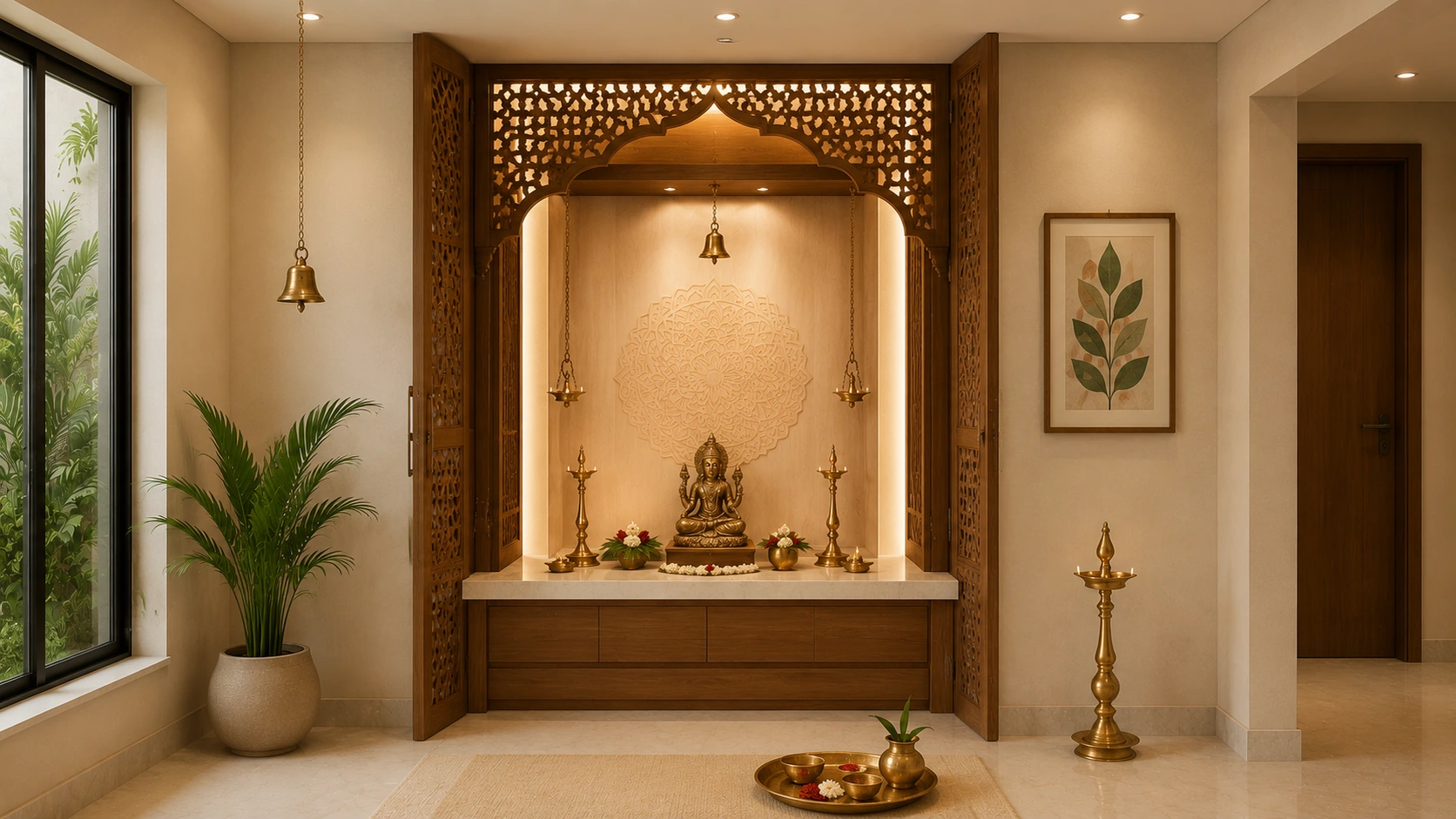
A pooja room is more than just a dedicated prayer space—it is a place where families seek peace, positivity, and spiritual connection. Whether you’re building a new home or renovating an existing one, choosing the right pooja room position as per Vastu can create a harmonious environment while enhancing the overall functionality of your home.
In this guide, we’ll explore the ideal direction for your pooja room, practical design tips, common mistakes to avoid, and how thoughtful interior design can help you create a beautiful and Vastu-compliant sacred space.
Why Is Pooja Room Position Important in Vastu?
According to Vastu Shastra, the placement of a pooja room influences the flow of positive energy within a home. While Vastu is based on traditional architectural principles, many homeowners follow these guidelines to create a calm and balanced living environment.
A well-planned pooja room should not only follow Vastu principles but also complement your home’s interior style and available space.
Best Direction for a Pooja Room as per Vastu
North-East (Ishanya) – The Ideal Location
The north-east corner is widely considered the most suitable direction for a pooja room. This area receives gentle morning sunlight and is traditionally associated with peace, wisdom, and spirituality.
East Direction
If the north-east isn’t possible, the east is another excellent option. It allows natural light to enter the prayer space and creates a bright, welcoming atmosphere.
North Direction
The north direction is also considered favourable, particularly in modern apartments where space limitations may make the north-east unavailable.
Directions to Avoid
To maintain a peaceful prayer environment, Vastu experts generally recommend avoiding:
-
- South-west corner
- Directly under staircases
- Beside or inside bathrooms
- Adjacent to storage rooms filled with clutter
- Inside bedrooms whenever possible
- If your home’s layout limits placement options, a skilled interior designer can create a functional pooja space while respecting both aesthetics and practical constraints.
Interior Design Ideas for a Modern Pooja Room
Today’s pooja rooms blend traditional values with contemporary design. Some popular ideas for 2026 include:
-
- Elegant teak wood pooja units
- White marble back panels
- Decorative wooden jaali partitions
- Warm concealed LED lighting
- Brass bells and traditional lamps
- Floating wall-mounted pooja units for compact homes
- Hidden storage for pooja essentials
These elements create a clean, peaceful space while seamlessly matching modern Kerala interiors.
Design Tips for Small Homes
Limited space doesn’t mean you have to compromise on design.
For apartments and compact homes:
-
- Choose wall-mounted mandirs.
- Use sliding doors to save space.
- Install floating shelves for storage.
- Keep the colour palette light with white, ivory, or natural wood finishes.
- Maximise natural light whenever possible.
- With smart planning, even a small pooja room can feel spacious and inviting.
Common Pooja Room Design Mistakes
Avoid these common mistakes while planning your pooja room:
-
- Placing the pooja room next to a bathroom.
- Overcrowding the space with excessive décor.
- Using harsh white lighting instead of warm ambient lighting.
- Ignoring ventilation.
- Choosing materials that are difficult to maintain.
- Not planning storage for pooja accessories.
- Simple, clutter-free designs often create a more peaceful atmosphere than heavily decorated spaces.
Choosing the Right Interior Designer
Designing a pooja room requires balancing tradition, functionality, and modern aesthetics. Experienced professionals understand how to optimise available space while incorporating Vastu-inspired layouts and premium finishes.
If you’re looking for the best interior designers in Trivandrum, choose a team that offers customised home interiors instead of standard modular solutions. Similarly, experienced pooja room interior designers in Trivandrum can help you create a prayer space that reflects your family’s traditions while blending beautifully with the rest of your home.
Conclusion
Following the recommended pooja room position as per Vastu is about creating a peaceful and thoughtfully designed space where your family can pray comfortably every day. Combined with quality materials, smart storage, warm lighting, and personalised interior design, your pooja room can become one of the most meaningful spaces in your home.
Whether you prefer a traditional wooden mandir or a sleek contemporary design, careful planning ensures your pooja room remains both spiritually uplifting and visually timeless.
Frequently Asked Questions (FAQ)
The north-east direction is considered the most auspicious. If that’s not possible, the east or north direction is also recommended.
Yes. A dedicated corner in the living room is a practical solution for many modern homes, especially apartments, as long as it remains clean and peaceful.
Teak wood, engineered wood with premium laminates, natural stone, and white marble are popular choices due to their durability and timeless appearance.
Absolutely. Wall-mounted mandirs, floating shelves, and compact modular pooja units are ideal for apartments with limited space.
Yes. Natural light is preferred whenever possible. If natural light isn’t available, warm LED lighting can create a calm and welcoming atmosphere.
Look for designers with experience in customised home interiors, space planning, and Vastu-friendly layouts. Reviewing their previous projects and discussing your family’s specific requirements will help ensure the design meets both your aesthetic and functional needs.