

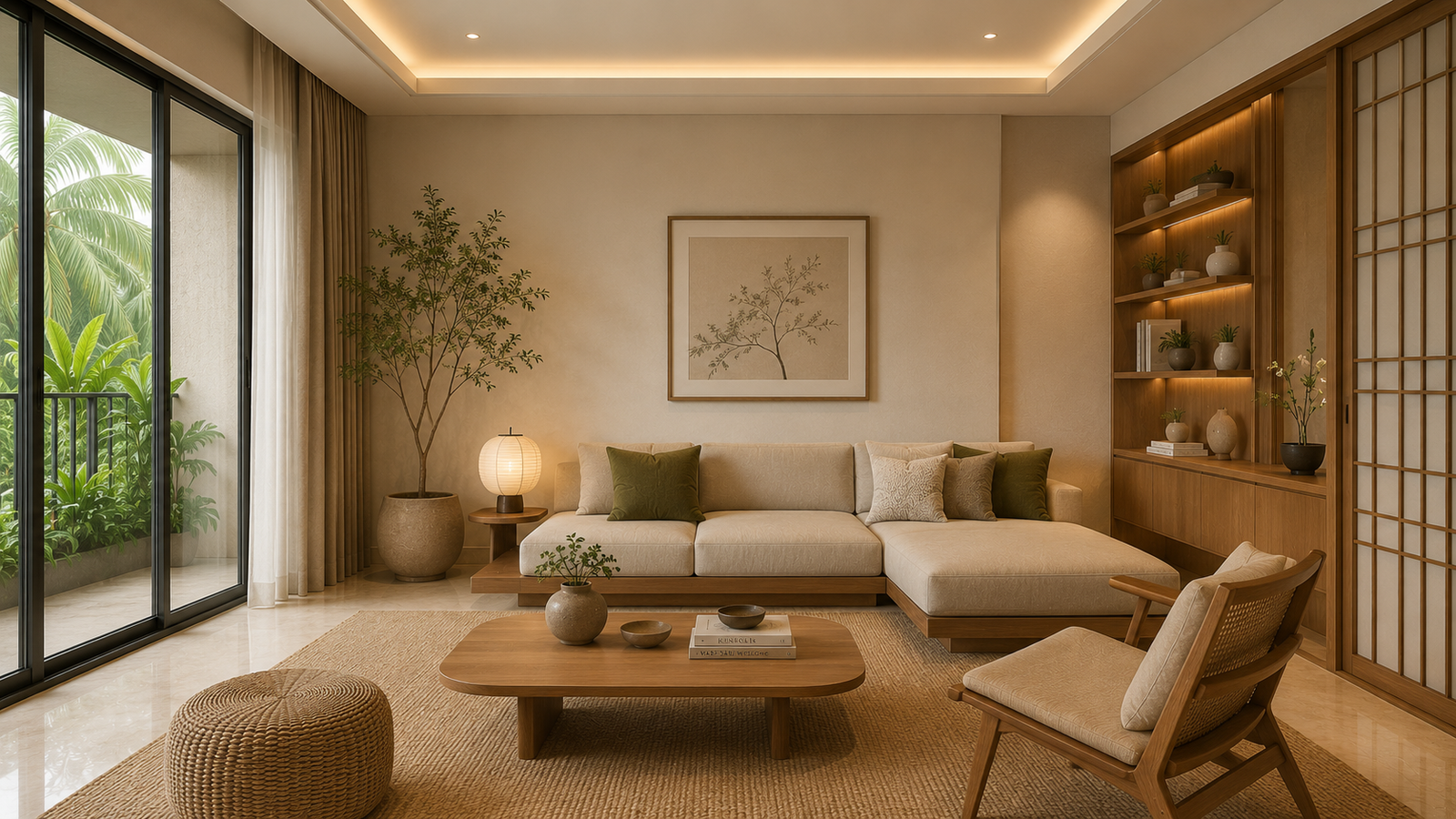
If you’re looking for the best ways to transform your home with modern, minimalist aesthetics, Japandi design is the answer. Learn why this design movement is capturing the hearts of homeowners across India and how best interior designers in Trivandrum are implementing this style.
What is Japandi Interior Design?
Japandi is a stunning fusion of two minimalist design philosophies: Japanese aesthetics and Scandinavian design. The term itself is a blend of “Japanese” and “Scandinavian,” and it represents a beautiful marriage of Eastern simplicity with Western warmth and functionality.
Japanese interior design has long been celebrated for its emphasis on emptiness, natural materials, and the principle of “less is more.” The Japanese concept of “Ma” – the beauty of empty space – forms the foundation of this aesthetic. Meanwhile, Scandinavian design brings warmth, comfort, and a sense of coziness (what the Scandinavians call “Hygge”) to interiors with its focus on natural wood, soft textures, and functional beauty.
When combined, these two design languages create spaces that are both serene and inviting, minimalist yet warm, and deeply functional without sacrificing beauty. It’s about creating homes that speak to both the mind and the heart – spaces where every object has purpose, where natural light is celebrated, and where the eye can rest comfortably.
Core Elements of Japandi Design:
- Minimalism: Only essential items, nothing superfluous
- Natural Materials: Wood, stone, clay, and natural textiles
- Neutral Color Palette: Whites, beiges, grays, blacks, and natural wood tones
- Quality over Quantity: Investment in fewer, better-made pieces
- Functionality: Every object serves a purpose
- Light and Space: Emphasis on natural light and open, airy spaces
- Handcrafted Details: Artisanal touches and imperfect beauty (Wabi-sabi)
- Comfort: Warmth and coziness despite the minimalist approach
Why Japandi Interior Design is Trending in India
- Over the past few years, Japandi design has been gaining remarkable traction across Indian homes. This isn’t just a passing trend – there are compelling reasons why this design philosophy resonates so deeply with Indian homeowners. Whether you’re in Mumbai, Bangalore, or looking for interior designers in Trivandrum, you’ll notice the growing popularity of this aesthetic.
1. Perfect Response to Urban Stress and Overcrowding
Indian cities are becoming increasingly crowded and chaotic. The overwhelming noise, pollution, and constant stimulation have made people crave peaceful, serene spaces. Japandi design, with its emphasis on calm, order, and open spaces, offers the perfect antidote. It creates sanctuaries within homes where residents can escape the urban chaos and find mental peace.
2. Alignment with Indian Values
Interestingly, Japandi design principles align remarkably well with traditional Indian values. The concept of simplicity, the importance of family spaces, the celebration of natural materials, and the respect for craftsmanship are values that have been central to Indian culture for centuries. Japandi merely modernizes these timeless principles.
3. Practical and Budget-Conscious
Unlike many design trends that demand expensive furniture and frequent upgrades, Japandi focuses on quality over quantity. It’s not about filling your home with costly décor—it’s about choosing a few meaningful, well-made pieces that truly fit your space and lifestyle. This makes Japandi both practical and budget-friendly, which is why many homeowners in India are drawn to it. In fact, many best interior designers in Trivandrum have noticed that clients love Japandi for its simple, timeless, and cost-effective approach.
4. Suits Various Home Sizes
Whether you live in a 1-bedroom apartment or a sprawling villa, Japandi works beautifully. In fact, it’s particularly effective in smaller spaces where it can make rooms feel larger and more open. This versatility appeals to Indian homeowners with varying space constraints.
5. Celebration of Local Craftsmanship
Japandi’s emphasis on handcrafted items and artisanal work aligns perfectly with India’s rich tradition of craft. Incorporating traditional Indian textiles, pottery, and wooden furniture into a Japandi setting creates a beautiful fusion that’s both globally contemporary and locally rooted.
156%
Increase in Japandi-style interior searches in India (2023)
45%
of millennial homeowners prefer this design style
6. Environmental Consciousness
With growing environmental awareness, more Indians are seeking sustainable design solutions. Japandi’s emphasis on natural, long-lasting materials and the principle of buying less aligns with eco-conscious living. The focus on quality items that last decades rather than years also supports sustainability goals.
7. Social Media Influence
Instagram, Pinterest, and other social platforms have played a crucial role in popularizing Japandi design. Beautiful, minimalist spaces photograph exceptionally well and garner high engagement. Indian interior designers and home enthusiasts sharing their Japandi transformations have inspired countless others to adopt this style.
Key Design Principles for Creating Japandi Spaces
The Principle of “Ma” – Negative Space
In Japanese design, empty space is not considered wasted space. It’s called “Ma” – the art of nothingness. Rather than filling every corner, Japandi design celebrates empty walls, uncluttered shelves, and breathing room. This principle is transformative for Indian homes, which traditionally tend to be filled with decorative items and furniture.
Wabi-Sabi – Beauty in Imperfection
Another crucial Japanese concept that’s central to Japandi is “Wabi-sabi” – the appreciation of impermanence, imperfection, and impermanence. This translates to choosing items with visible wear, natural aging, or handmade imperfections. A wooden table with a knot in the wood, a hand-thrown ceramic bowl with slight irregularities, or weathered stone – these are celebrated, not hidden.
Hygge – Warmth and Coziness
The Scandinavian concept of Hygge brings warmth to Japandi spaces. Through soft textures, warm lighting, and comfortable seating areas, Japandi creates spaces that are inviting and lived-in, never cold or institutional despite their minimalist appearance.
Sustainable Material Selection
Both Japanese and Scandinavian design traditions prioritize natural, sustainable materials. Wood, stone, ceramic, wool, linen, and cotton are preferred over synthetic alternatives. These materials age beautifully and contribute to the health and comfort of indoor spaces.
How to Set Up Japandi Design in Your Home
Step 1: Declutter and Create Open Space
Begin by removing unnecessary items from your home. Go through each room and ask: “Does this object serve a purpose? Does it bring me joy?” Keep only items that answer yes to both questions. This might seem extreme initially, but this decluttering process is essential to achieving the Japandi aesthetic and, honestly, quite liberating.
Create open floor spaces. In living rooms and bedrooms, reduce furniture and ensure there are areas where the eye can rest without encountering clutter.
Step 2: Choose a Neutral Color Palette
Paint walls in soft, neutral tones: whites, warm grays, off-whites, soft beiges, or muted blacks. These colors create a calm backdrop and allow natural light to play beautifully. Avoid bright, saturated colors in large areas, though small accents can work.
Use natural wood tones – warm browns, honey tones, and weathered grays – to add warmth to the neutral palette.
Step 3: Invest in Quality Wood Furniture
Select wooden furniture pieces that will stand the test of time. Look for simple designs with clean lines, minimal ornamentation, and visible wood grain. A simple wooden dining table, a wooden bed frame, or wooden shelving are excellent choices. Avoid overly ornate pieces common in traditional Indian furniture.
Step 4: Incorporate Natural Materials and Textures
Layer different natural textures: linen curtains, a jute rug, wool blankets, ceramic pottery, stone accents, and wooden elements. These textures add visual interest and create that crucial warmth (Hygge) that balances minimalism.
Step 5: Prioritize Natural Light
Maximize natural light by using minimal window coverings. Choose simple linen curtains or bamboo blinds that filter light beautifully without blocking it completely. Arrange furniture to allow light to flow through spaces.
Step 6: Add Thoughtful Lighting
Complement natural light with warm, soft artificial lighting. Choose simple, minimalist light fixtures. Floor lamps with warm-toned bulbs, paper lanterns, or simple pendant lights work beautifully. Avoid harsh overhead lighting.
Step 7: Include Plants and Natural Elements
Indoor plants bring life and freshness to Japandi spaces. Choose plants that fit the aesthetic: bamboo, peace lilies, monstera, or simple potted herbs. Place them in simple ceramic pots and position them to enhance, not clutter, your space.
Step 8: Create Functional Zones
In smaller homes, create distinct zones for different activities without physical walls. A reading nook with a comfortable chair, a dining area with a simple table, or a workspace with minimal desk setup – each area should be clearly defined yet open.
Step 9: Incorporate Handcrafted Items
Include a few carefully chosen handcrafted or artisanal items. A hand-thrown ceramic vase, a woven wall hanging, or a piece of traditional Indian wooden furniture can add character. The key is to select items that are meaningful and functional.
Step 10: Keep an Intentional Aesthetic
Every item in your Japandi home should have been chosen intentionally. Ask yourself before buying: Will this serve a function? Does it align with the aesthetic? Will it improve my daily life? This intentionality is the heart of Japandi design.
Finding the Best Interior Designers in Trivandrum for Japandi Design
Why Professional Help Matters
While Japandi principles can be implemented gradually yourself, working with professional interior designers in Trivandrum who specialize in this style can accelerate the process and ensure optimal results. Professional designers understand space planning, material selection, and lighting design in ways that create truly harmonious Japandi spaces.
Choosing the Right Japandi Interior Designer in Trivandrum
Honestly, designing a Japandi home isn’t something you can rush. It’s not just about picking out low-profile furniture or slapping some beige paint on the walls. It’s about creating a space where you actually feel something — calm, grounded, at home.
That’s exactly why who you work with matters so much.
If you’re searching for an interior designer in Trivandrum for a Japandi-style home, don’t just go by their portfolio size or Instagram following. Look at whether they genuinely understand minimalist living — not as a trend, but as a way of designing spaces that are clutter-free, thoughtful, and warm at the same time. The best designers know how to balance “less” with “enough,” and that’s a harder skill than it sounds.
Local knowledge also counts for a lot here. Trivandrum’s climate, the way light moves through Kerala homes, the humidity — these things shape every material and layout decision. A designer who understands this will make choices that look good and actually hold up over time.
At Homestin, that’s the kind of work we focus on — homes that feel simple without feeling cold, and elegant without feeling out of reach.
Q: Is Japandi design only suitable for modern homes?
A: Not at all! While Japandi works beautifully in modern architecture, it can be adapted to traditional homes as well. In fact, many traditional Kerala homes can be transformed into stunning Japandi spaces by decluttering, neutralizing color palettes, and embracing open spaces. The key is working with a designer who understands your home’s unique architectural character and can blend Japandi principles thoughtfully. Many best interior designers in Trivandrum specialize in adapting this style to older, traditional properties.
Q: Will my home look too empty or cold with Japandi design?
A: This is a common concern, but the answer is no. While Japandi is minimalist, it’s not sterile or cold. The Scandinavian element brings warmth through natural wood, soft textiles, comfortable seating, and warm lighting. The key is the balance between emptiness and coziness. Well-designed Japandi spaces feel inviting, peaceful, and lived-in, not like museum installations. The use of natural textures, plants, and thoughtfully chosen decorative items prevents the space from feeling impersonal.
Q: Can I mix Japandi with traditional Indian elements?
A: Absolutely! This is called “Japandi-fusion” and it’s growing in popularity, especially in India. You can incorporate traditional Indian textiles, handcrafted pottery, or wooden furniture with Japandi principles. The trick is to be selective and intentional. Choose pieces that are simple and handcrafted rather than ornate. For example, a simple handwoven Kerala textile as a wall hanging, or traditional brass items displayed minimally, can work beautifully within a Japandi framework. Many interior designers in Trivandrum excel at creating this cultural fusion.